
Why Matcha Is Running Short in 2026: What It Means for Cafés and Buyers
The 2026 matcha shortage is not a temporary blip. We break down the structural causes behind the supply crunch, what's driving prices up, and why direct sourcing from Uji now matters more than ever.
Short answer: The 2026 matcha shortage is the result of three simultaneous structural forces: record demand driven by social media and the wellness movement, a climate-driven harvest collapse of roughly 40% in Uji, and a production cycle that takes five years to respond. Prices are 70–90% above 2023 levels at the source. Modest easing is possible by late 2026, but a return to pre-crisis pricing is not expected.
Anyone who has ordered matcha in the past few months has felt it: availability is tightening, prices are rising, some suppliers are simply not responding. This is not a temporary hiccup. It is the result of three structural forces colliding at the same time.
What Is Happening on the Matcha Market Right Now?
Global matcha demand has exploded since 2023, driven by social media and the wellness movement. At the same time, tencha harvests in Uji, Japan's most important matcha region, collapsed by around 40% in 2024–2025 due to climate extremes. New plantations take five years to reach first harvest. The result: structural scarcity that is unlikely to ease before late 2026.
The effects are visible across the entire supply chain. European importers report that their Japanese producers have moved to annual allocation systems. Buyers who did not reserve their 2024 allocation find either empty stock or spot-market prices significantly above contracted rates in 2025/2026. Several mid-size German wholesalers have temporarily suspended their matcha ranges or switched to culinary-grade products to maintain supply.
What "allocation" means in practice: After the spring harvest, premium producers in Uji and Nishio assign fixed annual quantities to their buyers. Buyers who do not reserve a quantity during the procurement window (typically July through August) get no access to that harvest. There is no waitlist. Buyers who miss the window purchase on the spot market at substantially higher prices, or do not purchase at all.
Why Has Demand Structurally Increased?
Matcha was a niche product for decades. That has changed.
Matcha latte videos on TikTok alone have been viewed over 4 billion times in the past 18 months. The global market is valued at USD 3.91 billion in 2026 and projected to reach USD 5.35 billion by 2031, a compound annual growth rate of 6.47% (GlobeNewswire, Jan 2026). More aggressive forecasts put CAGR at 11.6%.
The critical point: this demand is not coming from end consumers alone. Cafés, hotel bars, and foodservice operators across Europe have adopted matcha as a differentiation signal, positioning it the way specialty coffee was positioned ten years ago. According to Perfect Daily Grind, the share of European cafés carrying matcha on the menu more than doubled between 2022 and 2025.
That demand curve has permanently shifted upward, independent of any single social media trend peaking or fading. When customers drink matcha daily, a trend becomes a habit. Habitual consumption is structural demand.
Why Has the Uji Harvest Collapsed?
Tencha, the raw shaded leaf ground into matcha, does not grow just anywhere. Quality depends on microclimate, soil composition, and decades of accumulated growing knowledge.
In Uji, Kyoto, the historic centre of Japanese matcha production, record temperatures during the critical spring shading window severely damaged the 2024–2025 harvest. A sixth-generation Uji farmer interviewed by Perfect Daily Grind reported a typical 2-tonne yield dropping to 1.5 tonnes, a 25% loss on a single farm. Across the region, tencha production fell roughly 40%.
Auction prices responded: up 265% against pre-crisis levels. Heritage producers in Uji halted new wholesale accounts and moved existing customers onto strict annual allocations.
Regional breakdown of production decline:
| Region | Share of Japan's tencha output | Decline 2024–2025 | Notes |
|---|---|---|---|
| Uji (Kyoto) | approx. 30–35% | approx. 40% | Historic centre, strongest quality profile |
| Kagoshima | approx. 40–45% | approx. 10–15% | Less affected, but lower quality segment |
| Nishio (Aichi) | approx. 15–20% | approx. 20–25% | Moderate impact, regionally well established |
Which grades are most affected? Ceremonial grade (drinking matcha) is more severely hit than culinary grade. The finest tencha leaves from the first flush (ichibancha) that produce ceremonial-quality powder come almost exclusively from Uji and Nishio. Kagoshima primarily produces culinary-grade powder for foodservice. This means: buyers looking specifically for high-quality drinking matcha feel the shortage more acutely than those sourcing culinary grade for baking or desserts.
Why Does Expanding Production Take So Long?
Anyone planting new tea fields today will see their first harvest in 2029 or 2030 at the earliest. Tencha cultivation is a generational investment, not a reaction to quarterly spot prices.
Growing tencha requires specific infrastructure: the shading systems (the kabusecha method) that drive L-theanine and chlorophyll accumulation must be built and calibrated. Soils need years of conditioning before they deliver the required quality. No amount of capital spending compresses that timeline to 12 months.
The demographic reality compounds the problem: the average farmer in Uji and Nishio is over 65 years old. Succession is thin. When growers retire in the coming years, their land does not automatically re-enter production. It requires new farmers with the same inherited knowledge, and that knowledge is held by individuals, not recorded in operating manuals.
Kagoshima, Japan's second-largest matcha region, has expanded capacity. But Uji quality is not replicable. The microclimate in the hills around Kyoto, the specific soils, and the centuries-deep growing tradition produce a flavor profile that cannot be identically reproduced elsewhere. Attempts to source matcha from other Asian countries tend to fail at the quality threshold for drinking-grade powder. Chinese matcha is typically culinary grade and not suitable for drinking straight.
How are European importers responding? Reactions vary. Large importers with long-term supply contracts hold availability but at higher prices. Mid-size traders without direct producer relationships have introduced 4–8 week lead times or narrowed their range. Smaller intermediaries have in some cases exited the market entirely. For cafés and retailers that previously sourced through wholesalers, this means: either pay higher prices or find a new source.
What Does This Mean Concretely for Prices and Availability?
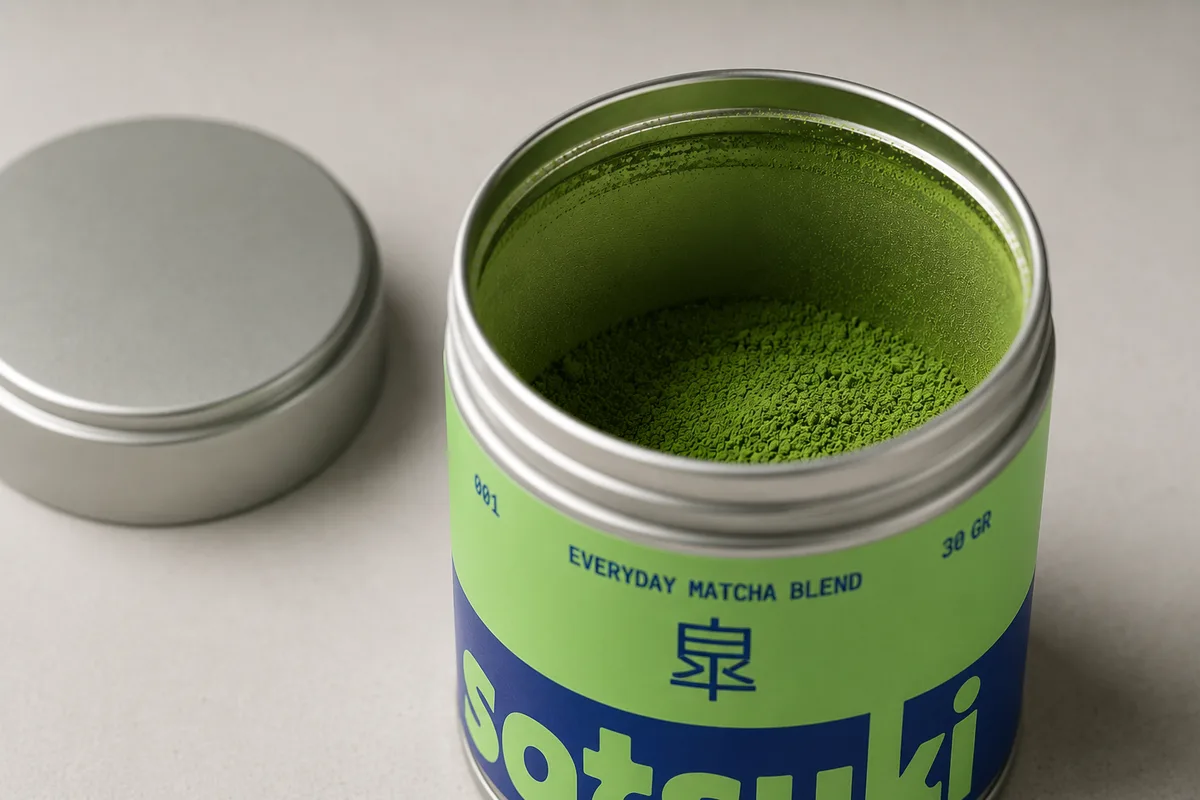
A 30g tin of premium ceremonial matcha that landed at around USD 11 at the importer level in 2023 now costs USD 19–22 in early 2026. That is not a middleman markup. That is the wholesale reality at the source.
For cafés that were running 70–75% gross margins on matcha lattes in 2023, the math now produces 50–55% margins at the same menu price. Responses vary: some operations have passed costs to customers, others have reformulated to culinary grade, and some have dropped matcha entirely.
Questions wholesale buyers should ask their suppliers right now:
- Where does your current stock come from, specifically? (Region and harvest year)
- Do you hold fixed allocations with the producer, or are you buying on the spot market?
- Which grades are genuinely available and which are temporarily sold out?
- How do I verify as a buyer that I am not receiving culinary grade labeled as ceremonial?
- What price guarantees are built into ongoing supply contracts?
A credible supplier can answer all of these. Anyone who deflects or stays vague typically does not have a direct source.
How do you tell that quality has not been compromised under shortage pressure? Some suppliers thin their stock by blending in lower grades or shipping older matcha without disclosure. Signs to look for: yellow-green powder color instead of deep green, flat or hay-like dry aroma with no freshness, and a bitter rather than rounded umami flavor in a direct tasting without milk. Anyone receiving regular deliveries should run a direct tasting whenever they switch suppliers or receive a new batch.
How Do I Protect Myself as a Buyer Against Shortages?
In a market defined by allocations and strict supply tiers, your position in the supply chain determines what you can buy and at what price.
Buyers sourcing through intermediaries sit at the end of the chain. They receive what is left over, at the price that remains after every margin above them has been taken. Direct importers with fixed allocations at the source are structurally insulated.
Practical advice for consumer buyers:
- Buy ahead rather than on demand. A 2–3 month stock buffer (opened matcha stays good for 4–6 weeks in a sealed tin; unopened up to 12 months) protects against short-term gaps.
- Use subscription models: regular buyers are typically prioritized in allocation rounds.
- Check origin: "Japan" is not a sufficient quality statement. Uji or Nishio as a specific region and a harvest year are the minimum standard.
Practical advice for cafés and B2B buyers:
- Build direct supplier relationships. A wholesaler with no direct source cannot protect your supply when their source tightens.
- Reserve allocations early. The booking window after the spring harvest (July–August) is the critical moment.
- Assess storage capacity. Planning 3–6 months ahead avoids spot-market pricing.
- Review contract terms. Supply contracts without price escalation clauses expose the supplier to risk, not the buyer.
Satsuki sources exclusively and directly from Uji, Kyoto, with no intermediary between the farm and the tin. Our 2025 harvest allocations are secured. That is why we can hold consistent availability and quality while other supply lines are running dry.
Browse the product overview or enquire directly about wholesale sourcing.
What Conditions Would Normalize the Market?
Industry analysts see a possible stabilisation window in late 2026 or early 2027, as new acreage in Kagoshima and incremental supply responses begin to feed through. But "stabilisation" does not mean a return to 2023 pricing. The structural demand is permanent. Prices will remain elevated.
Three conditions would need to align for meaningful market normalization:
- Two to three consecutive strong harvest seasons in Uji and Nishio without climate disruption
- Successful activation of new growing capacity in Kagoshima at sufficient volume to offset Uji shortfalls without dragging down average quality
- Demand moderation in one of the major growth markets (US, UK, Germany), which appears unlikely in the near term
According to World Tea News and the Nihoncha Institute / Japan Tea Central, no industry observer expects a full return to 2023 pricing. The sector has undergone a structural break. Understanding that means building stable supply now, rather than waiting for a price environment that is not coming back.
Buyers who establish direct, allocated supply relationships in 2026 will be better positioned for the years ahead than those who continue through intermediaries and hope the market corrects itself.
Sources: Perfect Daily Grind (Sep 2025), GlobeNewswire Matcha Market Report (Jan 2026), First Agri B2B Matcha Wholesale Pricing 2026, One with Tea: The 2026 Matcha Shortage Explained, Supply Chain Dive, World Tea News, Nihoncha Institute / Japan Tea Central.